

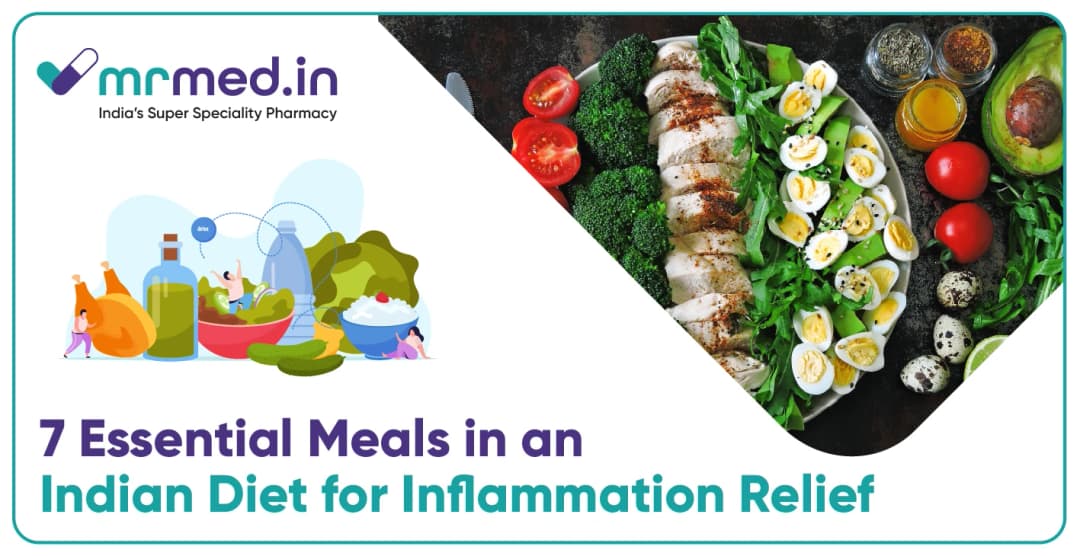
7-Day Indian Diet Plan for Reducing Inflammation





Last updated on 14 Sep 2026
Ever felt like your body’s silently screaming for help? Bloated stomach, unexplained fatigue, random skin flare-ups or stiff joints in the morning? You might be dealing with chronic inflammation. But don’t panic, your kitchen already holds the cure. Yes, grandma was right: food can be your best medicine.
So, if you're looking for a realistic, tasty, and doable way to calm down that internal chaos, here’s a 7-day anti-inflammatory Indian diet plan that’s built on whole foods, desi spices, and good vibes.
In this blog, we’ll break down what inflammation really is, why it matters, and how to calm it down using a wholesome, flavorful 7-day anti-inflammatory Indian diet plan. Let’s begin, because anti-inflammation doesn’t have to be anti-flavour.
Wait, What Is Inflammation and Why Should You Care?

Inflammation isn’t always the bad guy. It’s your body’s defence system switching on to fight infection or injury. Think of it as your body calling in its SWAT team. But when inflammation hangs around long after the job’s done, it can cause serious problems, heart disease, diabetes, arthritis, and even some cancers.
According to Harvard Medical School, chronic low-grade inflammation has been linked to almost every major disease. And here’s the kicker: one of the biggest contributors to this “silent fire” is what we eat.
What is an Anti-Inflammatory Diet?
An anti-inflammatory diet focuses on eating foods that naturally reduce inflammation and cutting out the ones that fuel it (sorry, ultra-processed snacks and sugar overloads). Think whole grains, colourful fruits and veggies, omega-3-rich foods, and lots of herbs and spices.
It’s less about restriction and more about healing through food.
And guess what? The Indian kitchen is already a goldmine of anti-inflammatory foods, from turmeric and ginger to amla and leafy greens.
Is Indian Food Good for an Anti-Inflammatory Diet?
Absolutely! Indian food often gets a bad reputation for being greasy or carb-heavy, but traditional Indian meals, when stripped off the excess oil and refined carbs, are loaded with inflammation-fighting nutrients.
Dr. Richa Anand, Chief Dietitian at Hiranandani Hospital, told The Indian Express that “A well-balanced Indian meal with millets, seasonal vegetables, fermented foods, and spices like turmeric can have powerful anti-inflammatory effects.”
Your 7-Day Anti-Inflammatory Indian Diet Plan (Simple, Wholesome & No-Fuss)
Each day below follows a simple format:
-
Warm water with lemon or turmeric to start
-
Home-style meals with whole grains, lentils, veggies, and spices
-
Evening detox drink or healthy snack
-
Plenty of hydration (coconut water, herbal teas, plain water)
Day 1 – Cleanse and Recharge
-
Morning: Warm lemon water + a handful of soaked almonds
-
Breakfast: Moong dal chilla with mint chutney
-
Lunch: Brown rice + palak dal + carrot-beet salad
-
Snack: Coconut water + roasted makhana
-
Dinner: Bajra khichdi + lauki raita
Tip: Start with lighter grains like moong dal and bajra to ease digestion.
Day 2 – Spice It Up (In a Good Way)
-
Morning: Turmeric water + 1 tsp soaked chia seeds
-
Breakfast: Vegetable upma with curry leaves and ginger
-
Lunch: Quinoa pulao with broccoli and beans + curd
-
Snack: Amla juice + walnuts
-
Dinner: Methi thepla + cucumber raita
Anti-inflammatory star: Fenugreek (methi) is great for joints and blood sugar.
Day 3 – Gut Healing Goals

-
Morning: Jeera water + 1 banana
-
Breakfast: Poha with veggies and peanuts
-
Lunch: Red rice + rajma curry + mixed veg sabzi
-
Snack: Buttermilk with ajwain + flaxseeds
-
Dinner: Oats khichdi + spinach soup
Fun fact: Fermented foods like buttermilk help build good gut bacteria.
Day 4 – Rainbow on a Plate
-
Morning: Ginger-tulsi tea
-
Breakfast: Smoothie bowl (banana, spinach, almond milk, flaxseed)
-
Lunch: Millet roti + aloo-gobi + moong sprouts salad
-
Snack: Roasted chana + herbal tea
-
Dinner: Pumpkin soup + tofu stir-fry
Why this works: The more colour on your plate, the more antioxidants you get.
Day 5 – Omega-3 Day (Veg Edition)
-
Morning: Turmeric water + walnuts
-
Breakfast: Ragi porridge with dates
-
Lunch: Amaranth (rajgira) roti + methi-tofu curry
-
Snack: Sunflower seeds trail mix
-
Dinner: Mixed lentil soup + steamed veggies
Pro tip: Walnuts, flaxseeds, and tofu = desi vegetarian omega-3 heroes.
Day 6 – Anti-Inflammation Comfort Food
-
Morning: Fennel seed water
-
Breakfast: Idli with sambhar (tamarind-free)
-
Lunch: Green moong dal + red rice + sauteed spinach
-
Snack: Herbal tea + boiled sweet potato
-
Dinner: Vegetable stew + appam
Why this works: Stews and sambhar are naturally rich in spices like cumin, mustard seeds, and curry leaves.
Day 7 – Reset and Reflect
-
Morning: Tulsi tea + handful of almonds
-
Breakfast: Besan pancake with grated veggies
-
Lunch: Millet biryani + cucumber-tomato raita
-
Snack: Lemon-coriander detox drink
-
Dinner: Khichdi + beetroot salad
End note: End the week with comfort, not cheat meals.
What Makes These Indian Foods Anti-Inflammatory?
Let’s break it down:
|
Food |
Benefit |
|
Turmeric (Haldi) |
Contains curcumin, a potent anti-inflammatory compound |
|
Amla |
Vitamin C powerhouse boosts immunity and reduces oxidative stress |
|
Ginger |
Fights inflammation in joints and the gut |
|
Leafy greens |
Packed with polyphenols and carotenoids |
|
Flaxseeds & Walnuts |
Loaded with omega-3s |
|
Legumes & lentils |
Rich in fibre and antioxidants |
|
Spices (jeera, ajwain, cinnamon) |
Help regulate gut and sugar-related inflammation |
How to Make This Diet Sustainable?
-
Don’t over-restrict. Make small swaps: brown rice over white, mustard oil over refined.
-
Batch cook basics like dals, chutneys, and steamed veggies.
-
Use ghee mindfully. It’s not the enemy; moderate ghee has CLA, which reduces inflammation.
-
Spice it smart. Haldi, jeera, methi, and hing aren’t just for taste—they’re healing.

Frequently Asked Questions (FAQs)
1. What foods are anti-inflammatory?
Foods like turmeric, ginger, leafy greens, berries, walnuts, flaxseeds, and lentils are top choices. Avoid sugar, refined carbs, and trans fats.
2. Does turmeric reduce inflammation?
Yes! Curcumin, the active compound in turmeric, has strong anti-inflammatory effects. Pair it with black pepper to boost absorption.
3. Can vegetarian diet be anti-inflammatory?
Totally. Many plant-based foods like whole grains, legumes, and seeds have anti-inflammatory properties. Just make sure to include omega-3-rich sources like flaxseeds and walnuts.
4. How long until anti-inflammatory diet works?
Most people feel a difference within a week—less bloating, better energy, improved mood. Chronic issues may take 4-6 weeks of consistency.
5. What spices reduce inflammation?
Turmeric, ginger, cinnamon, cumin, cloves, and black pepper are your spice rack superheroes.
Let’s Call It a Glow-Up, Not a Diet!
Here’s the thing: this isn’t a “diet” you jump on and off. It’s a lifestyle shift. A way to reconnect with food that heals and nourishes, not harms.
If you’ve been battling constant fatigue, aches, skin issues, or digestive drama, your body’s waving a red flag. Start small, stay consistent, and your body will thank you. And hey, if you try this 7-day anti-inflammatory Indian diet plan, let us know how it went!
Your turn! Ready to reset your system? Share this with a friend who needs an inflammation detox. Or better, try it together and make it fun.
People Also Read
References
Disclaimer: The content in this blog is for general informational purposes only and is not a substitute for professional medical advice, diagnosis, or treatment. Always consult your doctor or a registered dietitian before making any changes to your diet, especially if you have a medical condition or are taking prescribed medication. While the information is based on trusted sources, individual needs and results may vary. MrMed does not promote or endorse any specific food or treatment mentioned unless explicitly stated.












Comments